Front Porch GuideArchitectural, Landscaping, and Furnishing IdeasUse our Front Porch Guide below to determine front porch designs along with porch characteristics, front yard landscaping ideas, and outdoor furniture ideas.Our guide will give you an excellent starting point for designing, decorating, landscaping, and furnishing your front porch. Front Porch GuidePlease NoteOur front porch guide is simply some guidelines and suggestions for your porch and landscaping based upon the style of home you have. Use your judgment and creativity to make your home "yours".Architectural Style: Classical home styles such as Federal, Revival, Tidewater, Antebellum Porch Characteristics: Porches range in size from small to large; usually roofed; symmetrical facades with central
entrance ways; an equal number of windows flank each side of the door.
Porch Characteristics: Porches range in size from small to large; usually roofed; symmetrical facades with central
entrance ways; an equal number of windows flank each side of the door.
Roofs are either hipped (sloped on all four sides) or gabled; porch columns are classical or rectangular in design Landscaping Ideas: Clipped hedges around porch; use brick walk ways leading to porch, use geometric plantings in containers on porch Porch Furniture Ideas: Teak furniture Architectural Style: Victorian home styles such as Gothic Revival, Italian, Queen Anne, Eastlake Porch Characteristics: Porches range in size from small to large; usually roofed; symmetrical facades
with central entrance ways; an equal number of windows flank each side of the door.
Porch Characteristics: Porches range in size from small to large; usually roofed; symmetrical facades
with central entrance ways; an equal number of windows flank each side of the door.
Roofs are either hipped (sloped on all four sides) or gabled; porch columns are classical or rectangular in design Landscaping Ideas: Clipped hedges around porch; use brick walk ways leading to porch, use geometric plantings in containers on porch Porch Furniture Ideas: Wrought-iron furniture Architectural Style: Post-war homes such as Cape Cod, Ranch, Raised Ranch, Split-Level Porch Characteristics: Rather small porch and most without roof or overhang; siding is usually clapboard, shingles or
brick; symmetrical appearance; multi-paned windows (double hung); centered front door (often with a roof-portico); decorative shutters
Porch Characteristics: Rather small porch and most without roof or overhang; siding is usually clapboard, shingles or
brick; symmetrical appearance; multi-paned windows (double hung); centered front door (often with a roof-portico); decorative shutters
Pediments over the door, consider an overhang, small roof, or awning over door, upgrade door frame, extend porch to either side for additional space (perhaps a patio adjacent to porch for plants and chairs) Roofs are either hipped (sloped on all four sides) or gabled; porch columns are classical or rectangular in design Landscaping Ideas: A low sheared hedge along the base will emphasize its horizontal profile, include a few simple plants with contrasting shapes, match plantings on either side, use stone walkways leading to porch Porch Furniture Ideas: Naturally weathered or painted wooden furniture Architectural Style: Early 20th century style such as Arts and Crafts, Craftsman, Bungalow, Cotswold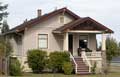 Porch Characteristics: Arts and Crafts (Craftsman) Homes: Porches have thick square or round columns, stone supports One or two stories; wood, stone, or stucco; exposed roof rafters;
Roofs are either hipped (sloped on all four sides) or gabled; porch columns are classical or rectangular in design Landscaping Ideas: Symmetric or asymmetrical plantings depending on specific house design, use layered, natural looking plantings, use a mix of wood, brick, in, on, and around your porch, use stone walkways leading to porch Porch Furniture Ideas: Wooden garden furniture with simple lines Architectural Style: Colonial style also Dutch, Garrison, Saltbox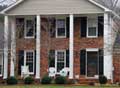 Porch Characteristics: Porch is usually small in size with a pediment and perhaps more ornate door frames; narrow clapboard siding (could be bricked)
Crown molding or a pediment over the front door: pilasters or columns; double-hung windows or multi-pane windows in pairs on each side of front door Landscaping Ideas: Brick pathways, symmetrical large plantings on each side of the door, geometric beds, make the porch/entrance dramatic with striking door color and wreath Porch Furniture Ideas: Classic teak furniture, geometric placement is the key Architectural Style: Farmhouse English /Country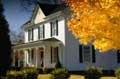 Porch Characteristics: Large wrap-around porches; tall windows; shingle or metal roofs; dormers and
gables; lat siding; simple moldings and trim; odd, irregular shape; lack of ornamentation; tall, over-sized windows;
natural materials like cedar or stone; blends with natural surroundings
Porch Characteristics: Large wrap-around porches; tall windows; shingle or metal roofs; dormers and
gables; lat siding; simple moldings and trim; odd, irregular shape; lack of ornamentation; tall, over-sized windows;
natural materials like cedar or stone; blends with natural surroundings
Landscaping Ideas: Use symmetrical plantings, simple painted garden furniture, rockers and a swing of course! Use brick. flagstone and stepping-stone walk ways to access the porch. Also consider using prominent features like arbors and pergolas. Use mixed beds and borders around porch. Porch Furniture Ideas: Use teak or heavy wrought-iron furniture. Architectural Style: Contemporary or modern also Bauhaus, International, or A-Frame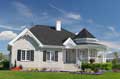 Porch Characteristics: Porches are usually large and can be covered or not; not easily distinguishable due
to many shapes but the general rule is the presence of large, tall panes of glass. Odd, irregular shape design; lack of
ornate moldings; wood or stone siding; blends with natural surroundings
Porch Characteristics: Porches are usually large and can be covered or not; not easily distinguishable due
to many shapes but the general rule is the presence of large, tall panes of glass. Odd, irregular shape design; lack of
ornate moldings; wood or stone siding; blends with natural surroundings
Landscaping Ideas: Use asymmetrical plantings in, on, and around porch; evergreens around porch is common; flagstones for walk ways Porch Furniture Ideas: Stained or weathered furniture Architectural Style: Neo homes also neo eclectic, neo colonial, neo-Mediterranean, post-modern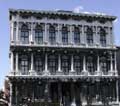 Porch Characteristics: Porches are usually ground level, deeply shaded with arches; usually incorporates a mix of details imitating the architecture of Spain, Italy, Greece, and Morocco.
Often called Mediterranean, Spanish, or Hispanic. Low-pitched roofs; red roof tiles; stucco siding; arches above doors, windows, and porches; heavy wooden doors Landscaping Ideas: Usually asymmetric bold plantings; incorporate herbs and plants with silver foliage, and brightly colored vines. Where feasible, use succulents and other drought-tolerant plants in the Southwest Porch Furniture Ideas: Metal, artistic, or contemporary furniture Architectural Style: Mediterranean or Spanish Colonial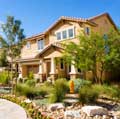 Porch Characteristics: A distinguishing characteristic is the extension of the side or
front wall to form a porch; blends with environment, usually built from stucco or coquina rock; thick stucco
walls to conserve heating and cooling; limited ornamentation arched entrance ways; wooden roof supports over porches
Porch Characteristics: A distinguishing characteristic is the extension of the side or
front wall to form a porch; blends with environment, usually built from stucco or coquina rock; thick stucco
walls to conserve heating and cooling; limited ornamentation arched entrance ways; wooden roof supports over porches
Often called Mediterranean, Spanish, or Hispanic. Low-pitched roofs; red roof tiles; stucco siding; arches above doors, windows, and porches; heavy wooden doors Landscaping Ideas: Symmetrical or asymmetrical plantings depending on specific house design; use Mediterranean herbs and plants with silver foliage, use brightly colored vines to cover stucco walls Use tile or cut-stone pavers for walk ways; include water features Porch Furniture Ideas: Wrought-iron furniture Architectural Style: Southwest Prairie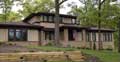 Porch Characteristics: Southwest houses usually have one-story porches with massive square supports; come in
two styles--boxy and symmetrical or low-slung and asymmetrical. Roofs are low-pitched, with wide eaves.
Brick and clapboard are the most common building materials.
Porch Characteristics: Southwest houses usually have one-story porches with massive square supports; come in
two styles--boxy and symmetrical or low-slung and asymmetrical. Roofs are low-pitched, with wide eaves.
Brick and clapboard are the most common building materials.
Often called Mediterranean, Spanish, or Hispanic. Low-pitched roofs; red roof tiles; stucco siding; arches above doors, windows, and porches; heavy wooden doors Landscaping Ideas: Often symmetrical plantings, use succulents and other drought-resistance plants; use gravel and tile/sandstone for walk ways Use tile or cut-stone pavers for walk ways; include water features Porch Furniture Ideas: Heavy, carved wooden furniture End of Front Porch Guide We hope you found our front porch guide useful. Our front porch guide should only be a start to learning more about front porch designs, landscaping, outdoor furniture, and lots more. We have lots to offer! If you have suggestions for more home styles to be included in our front porch guide, please let us know. Thank you! Be sure to see our entire porch design section, covering porch architecture from ranch style to contemporary porch styles and more.

Hi! We're Mary and Dave, lifelong DIYers, high school sweethearts, and we both love porches. You've come to the right place for thousands of porch ideas. Our Sponsors

End Sponsors Helpful LinksEnjoy shopping Amazon (affiliate link)Popular PagesWhat's NewJoin Our Newsletter Family Porch Designs Porch Ideas for Mobile Homes Find a Local Contractor Build a Porch | Small Porches Porch Columns | Porch Railings Screened Porches Porch Curtains | Porch Enclosures Porch Landscaping | Vinyl Lattice Porch Decorating | Porch Ideas Shop Navigation AidsHome | Top of PageSite Search | Site Map Contact Us PoliciesDisclosure Policy | Privacy PolicyLegal Info Please Join Us Here Also



Find a Trusted Local Pro Copyright© 2008-2024 Front-Porch-Ideas-and-More.com All rights reserved. No content or photos may be reused or reproduced in any way without our express written permission. At no extra cost to you, we earn a commission by referring you to some products on merchant sites. See our disclosure policy. We, Front Porch Ideas and More, confirm, as stated on our privacy policy, that we do not sell personal information. All content here is solely for presenting ideas. We recommend consulting with a licensed, experienced contractor before you begin your project. We make no guarantees of accuracy or completeness of information on our site or any links to other websites contained here. Thank you for taking your time to stop by. See what's popular and new here. 
|
Hi! We're Mary and Dave, lifelong DIYers, high school sweethearts, and we both love porches. You've come to the right place for thousands of porch ideas. --- Our Sponsors ---
--- End Sponsors ---Find Top-Rated Service Pros
Our Newsletter, Front Porch AppealLearn more!Thank you for being here! |
|||||
|
At no extra cost to you, we earn a commission by referring you to some products on merchant sites. See our disclosure policy.
We, Front Porch Ideas and More, confirm, as stated on our privacy policy, that we do not sell personal information. All content here is solely for presenting ideas. We recommend consulting with a licensed, experienced contractor before you begin your project. We make no guarantees of accuracy or completeness of information on our site or any links to other websites contained here. Front Porch Home | Return to Top Contact Us | About Us | Advertise with Us | Search | Site Map Media | Privacy Policy | Disclosure | Legal Notice | What's New 

|
||||||
|
No content or photos may be reproduced or copied in any way without our express written permission. 
| ||||||