Versatile Screen Panels for PorchesConvert Your Porch, Deck or Even Your GarageScreen panels for porches, decks, or patios are so versatile you can easily use them to transform your area into a screened porch or even three season room. We will show you 8 different ways!Think of the fun you and your family will have by extending your outdoor time in comfort. Play games, have parties, or perhaps just relax in a bug-free environment. 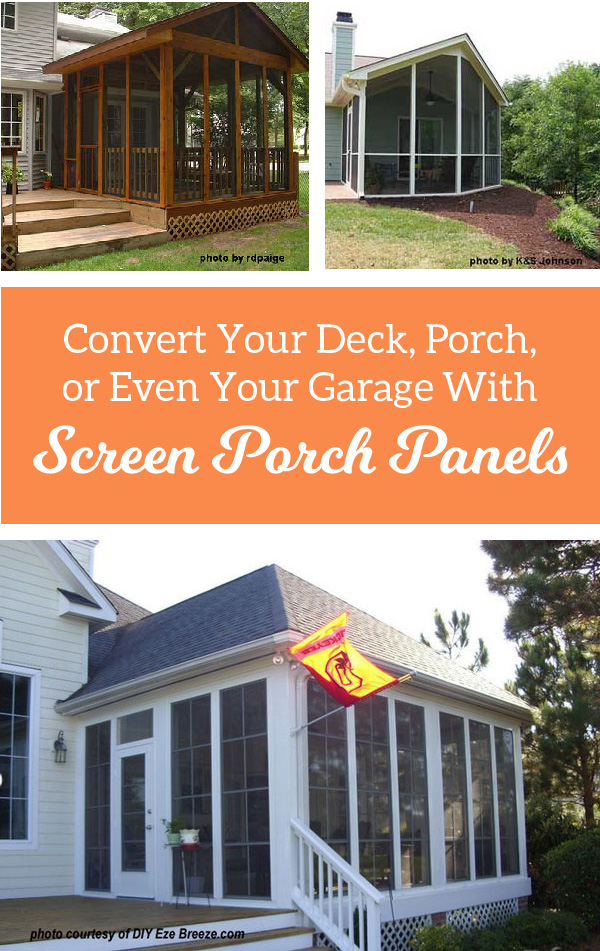
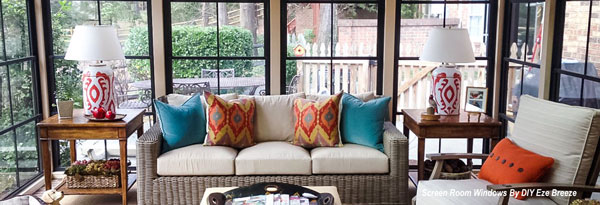
photo courtesy of the DIY Eze BreezeObviously, screen panels or screen porch windows are the most important part of a screened porch. Let us help you choose the best porch screening option for you.Let's step through the options you have when it comes to screen panels for porches, decks, and patios. Which one is best for you, your skill level, and your budget? Screen Panels for Porches - 8 Styles to Think AboutStyle 1: Install Screen Directly on Framing to Make the Screened Porch Panels
Disadvantages: Screening larger openings without visible screen distortion may be difficult. If you need to repair the screen, you'll probably have to replace the whole thing as it's hard to take it apart and put it back together. It's also difficult to paint or stain the railings around the screen. 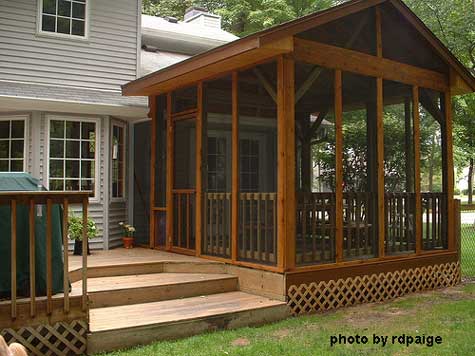
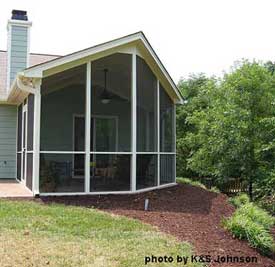
Screen Porch Addition with Screened Panels
|
||||||
 The better quality the screening material, the longer it will last.
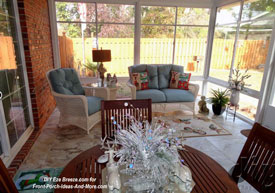
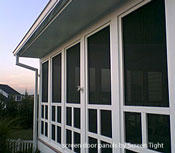 Use these screen door panels may be perfect as screen panels for porches.
Visit Related Topics DIY Screened Porch Kits
Before you buy a screened porch kit, see these suggestions to save time and .... |
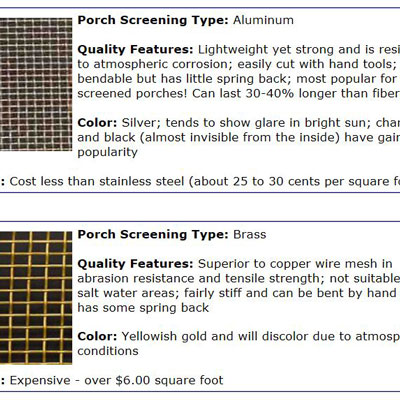 Porch Screening Options
Compare and contrast different types of porch screening; one of which will be ideal for your porch... |
 Screened In Porch Ideas for Using Your Porch
See why knowing how you will use your porch will help determine its design... |
You Are Here:
|

Hi! We're Mary and Dave, lifelong DIYers, high school sweethearts, and we both love porches. You've come to the right place for thousands of porch ideas.
Our Sponsors



End Sponsors
Helpful Links
Enjoy shopping Amazon (affiliate link)Popular Pages
What's NewJoin Our Newsletter Family
Porch Designs
Porch Ideas for Mobile Homes
Find a Local Contractor
Build a Porch | Small Porches
Porch Columns | Porch Railings
Screened Porches
Porch Curtains | Porch Enclosures
Porch Landscaping | Vinyl Lattice
Porch Decorating | Porch Ideas
Shop
Navigation Aids
Home | Top of PageSite Search | Site Map
Contact Us
Policies
Disclosure Policy | Privacy PolicyLegal Info
Please Join Us Here Also



Find a Trusted Local Pro
Copyright© 2008-2024
Front-Porch-Ideas-and-More.com All rights reserved.
No content or photos may be reused or reproduced in any way without our express written permission.
At no extra cost to you, we earn a commission by referring you to some products on merchant sites. See our disclosure policy.
We, Front Porch Ideas and More, confirm, as stated on our privacy policy, that we do not sell personal information.
All content here is solely for presenting ideas. We recommend consulting with a licensed, experienced contractor before you begin your project.
We make no guarantees of accuracy or completeness of information on our site or any links to other websites contained here.
Thank you for taking your time to stop by. See what's popular and new here.

Hi! We're Mary and Dave, lifelong DIYers, high school sweethearts, and we both love porches. You've come to the right place for thousands of porch ideas.
--- Our Sponsors ---
--- End Sponsors ---
Find Top-Rated Service Pros
Our Newsletter, Front Porch Appeal
Learn more!Thank you for being here!
At no extra cost to you, we earn a commission by referring you to some products on merchant sites. See our disclosure policy.
We, Front Porch Ideas and More, confirm, as stated on our privacy policy, that we do not sell personal information.
All content here is solely for presenting ideas. We recommend consulting with a licensed, experienced contractor before you begin your project.
We make no guarantees of accuracy or completeness of information on our site or any links to other websites contained here.
Front Porch Home | Return to Top
Contact Us | About Us | Advertise with Us | Search | Site Map
Media | Privacy Policy | Disclosure | Legal Notice | What's New


We, Front Porch Ideas and More, confirm, as stated on our privacy policy, that we do not sell personal information.
All content here is solely for presenting ideas. We recommend consulting with a licensed, experienced contractor before you begin your project.
We make no guarantees of accuracy or completeness of information on our site or any links to other websites contained here.
Front Porch Home | Return to Top
Contact Us | About Us | Advertise with Us | Search | Site Map
Media | Privacy Policy | Disclosure | Legal Notice | What's New

No content or photos may be reproduced or copied in any way without our express written permission.
